Category: Advocacy

  • How Parents can Prepare for a Strike at Your Child’s School Site

    by Mariposa | February 2, 2026
    Reprinted with permission. This article was previously posted on Medium as “How as a public school parent to “prepare” for a workers strike at your CA school site” (Follow and support their work!)

    Hi! I am a CA current public school parent of a elementary age student and I am creating this guide, because so many parents have personally contacted me on best practices of what do if their school district will strike. Many Unions at public school districts in CA have authorized a strike, as mines has. LAUSD, SFUSD, SDUSD, and many others have either autorhized a strike or it feels like that vote might be happening soon.

    This is a guide from a well seasoned public school parent on what to do now in case the possibility if your public school district goes on strike. Every democracy only functions with a well supported fully funded public education system. Without public education, democracy dies.

    How to prepare for a teacher strike at your kid’s school.

    Here is how best to prepare so your child doesn’t cross the picket line and stands in solidarity with its teachers.

    1. Tell your school district they need to settle with the teacher’s union.

    Tell the district how very important it is to you as a parent and how you support your union and for them to settle. If you are a registered voter, remind your school board you will be voting in your upcoming elections. Have your student write or draw a picture of support of your union to the district. Write comments of support on your district’s social media page on fb, IG, or whenever else.

    2. Contact your after/before school program about childcare and create a mutual aid childcare.

    If you have a job schedule that will be impacted due to the loss of a school day, contact your childcare that your child normally attends, and ask them what do they plan to do if a strike happens, if they will be providing childcare, and if there are any extra costs associated with it. They may not have a answer for you but inquiring to them lets them know there is a demand from parents for this childcare.

    If you have no childcare program, or your childcare program is not covering childcare during the strike, CREATE YOUR OWN CHILDCARE. Many parents are creating possible childcare opportunities with fellow school site parents, and reach out to the parents you already know and ask them if they want to share childcare days during this time.

    3. Contact your workplace if this will impact your workload.

    If you have a daytime/afternoon work that will be impacted due to loss of a school day. Let them know now as much as you, and that when more information becomes available you will share that as well. See if there are work family accommodations that can be requested, like working from home while there is a strike, etc. This is very common with other strikes like public transit strikes that prevent workers from getting to work and many will work at home during that time being.

    4. Join your teachers on the line!

    If you can join your teachers on the line while striking for at least a day, even a hour means a lot. Stand in Solidarity with them, and seeing thier students and families show up for them by holding a sign, marching, or whatever else is needed, means so much. Dropping off food and waters are also huge support to your teachers! This is a great way to show some teacher appreciation!

    5. Have a conversation with your kid about the potential strike.

    Let your student/s know that a potential strike might happen at thier school site, and how that means their teachers are standing up for what they believe in and if there was any other way to not have a strike the teachers would have done it. Teachers only strike if there is no other possible way. Brainstorm ideas with your student how they can show solidarity with teachers, making that is baking cookies to give to teachers, buying water bottles, writing a personal letter, making signs, making plans to join the line if there is a strike.

    6. Read these books with your kids.

    Si, Se Puede! Yes, We Can!: Janitor Strike in L.A. By Diana Cohn and illustrated by Francisco Delgado.
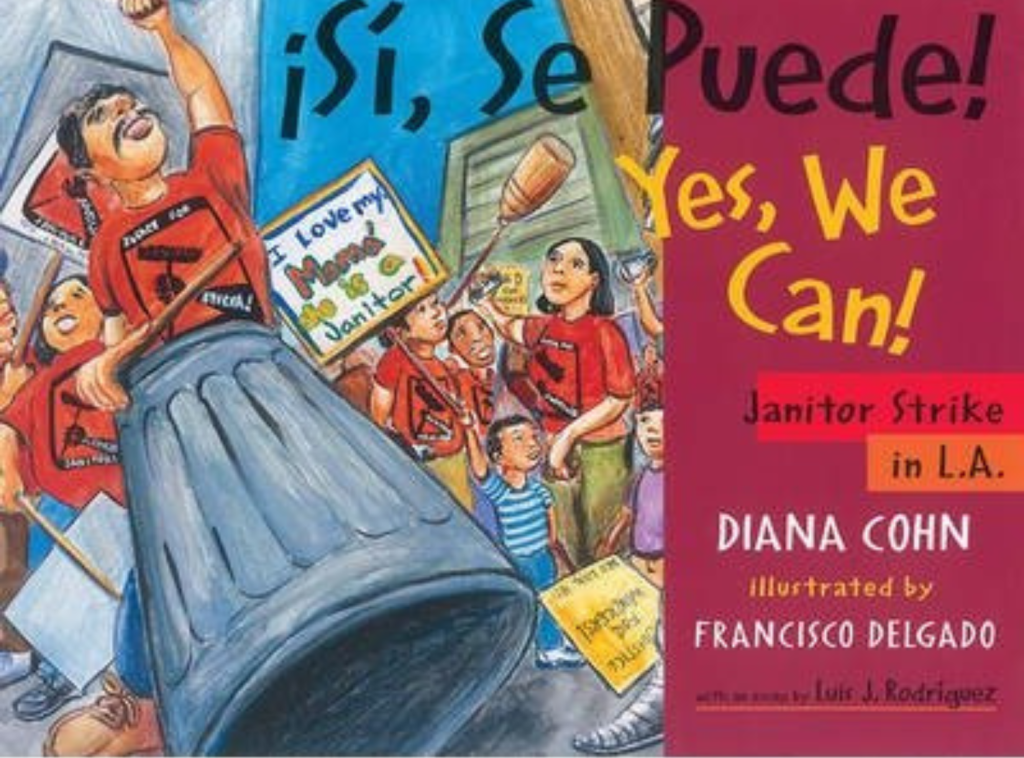
    Title of book saying “S, Se Puede - Yes We Can!” about the Janitor Strike in L.A. by Diana Cohn and illustrated by Francisco Delgado. It shows a colorful illustration of workers of many races in red shirts protesting with children and families to fight for worker rights.

    Readaloud: https://youtu.be/0ygADdYZ624?si=hW5BeMbcpH3_G_Wf

    Readaloud book only: https://youtu.be/uONnW5SoaGE?si=cTLXMmPXZY_mprvD
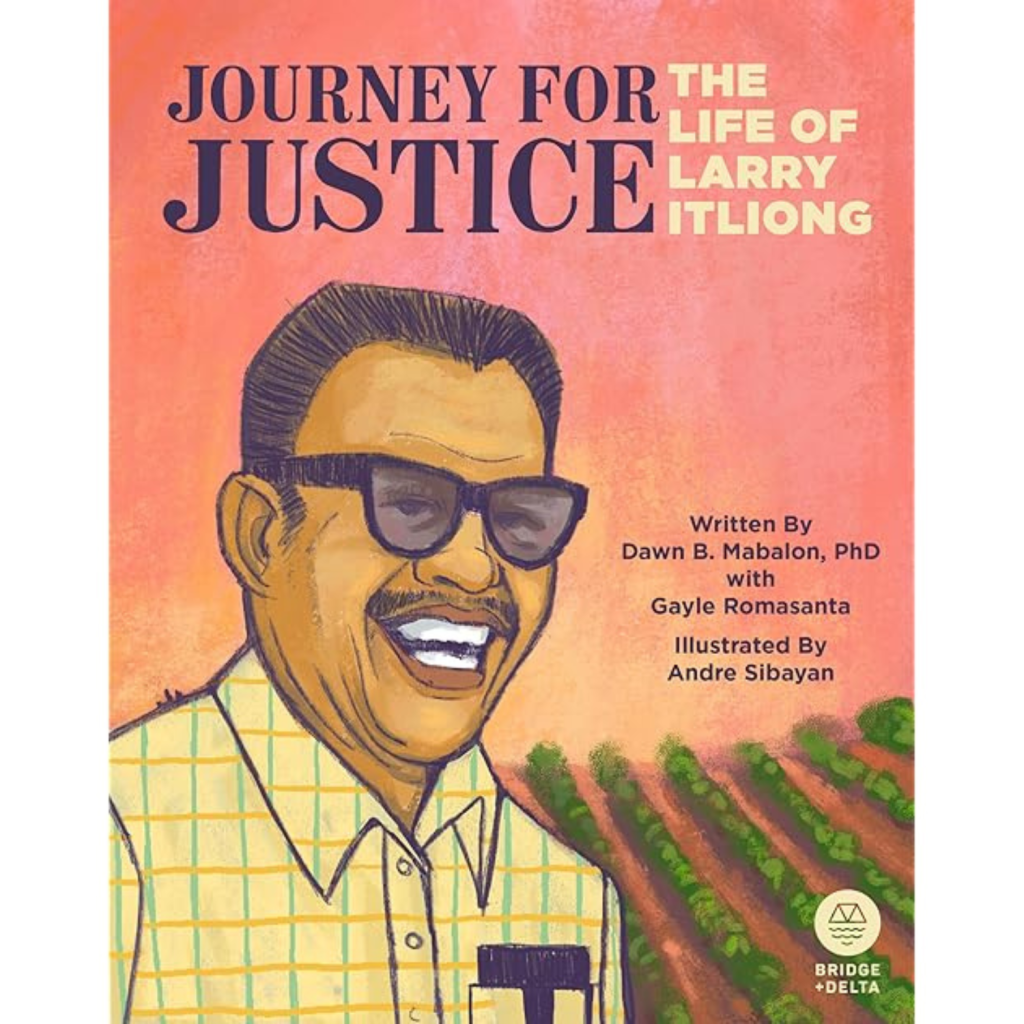
    This is a book cover with the title: “Journey for Justice - The Life of Larry Itliong” by Dawn B. Babalon, PhD and Gayle Romasanta. Illustrated by Andre Sabiyan. It shows a colorful illustration of labor leader, Larry Itliong, a Filipino many in glasses and short hair smiling in front of a peachy colored background and green rows of argiculture in the background.

    Journey for Justice: The Life of Larry Itliong by Dawn Bohulano Mabalon, Gayle Romasanta

    Readaloud: https://youtu.be/jTl17BnAaPk?si=8nH96hGqTDeIqmcO
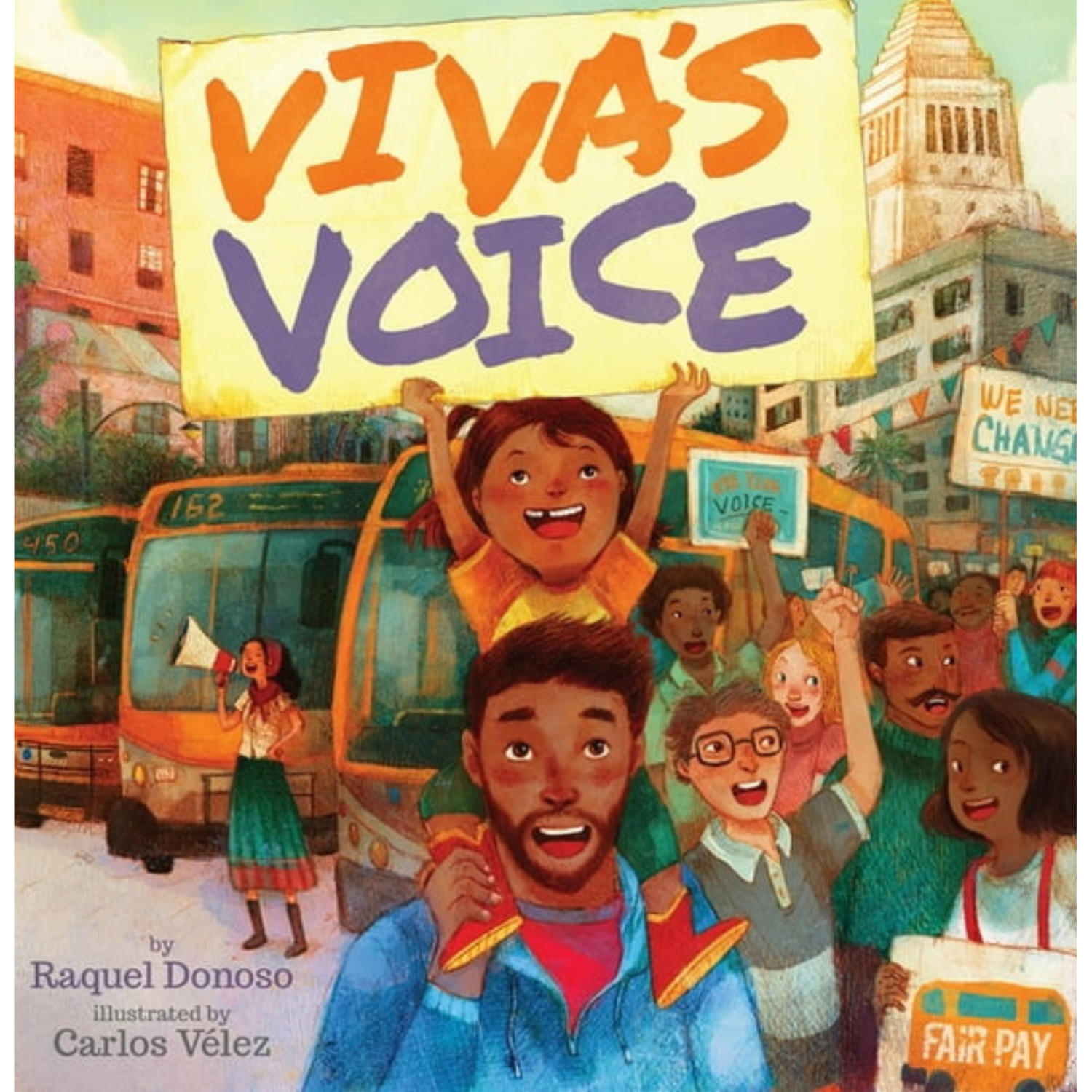
    This is a book cover titled: “Viva’s Voice” by Raquel Donoso and illustrated by Carlos Vélez. It shows a colorful illustration of a brown child on the shoulders of her father holding a sign listing the title of the book. Behind her are people of many racial backgrounds happily chanting strike slogans in front of busses. Some of theri signs ask for change and air pay.

    Viva’s Voice by Raquel Donoso, illustrated by Carlos Velez.

    Readaloud: https://youtu.be/_4FIxkv_STM?si=6IlJ1BGh0VTL0Hz_
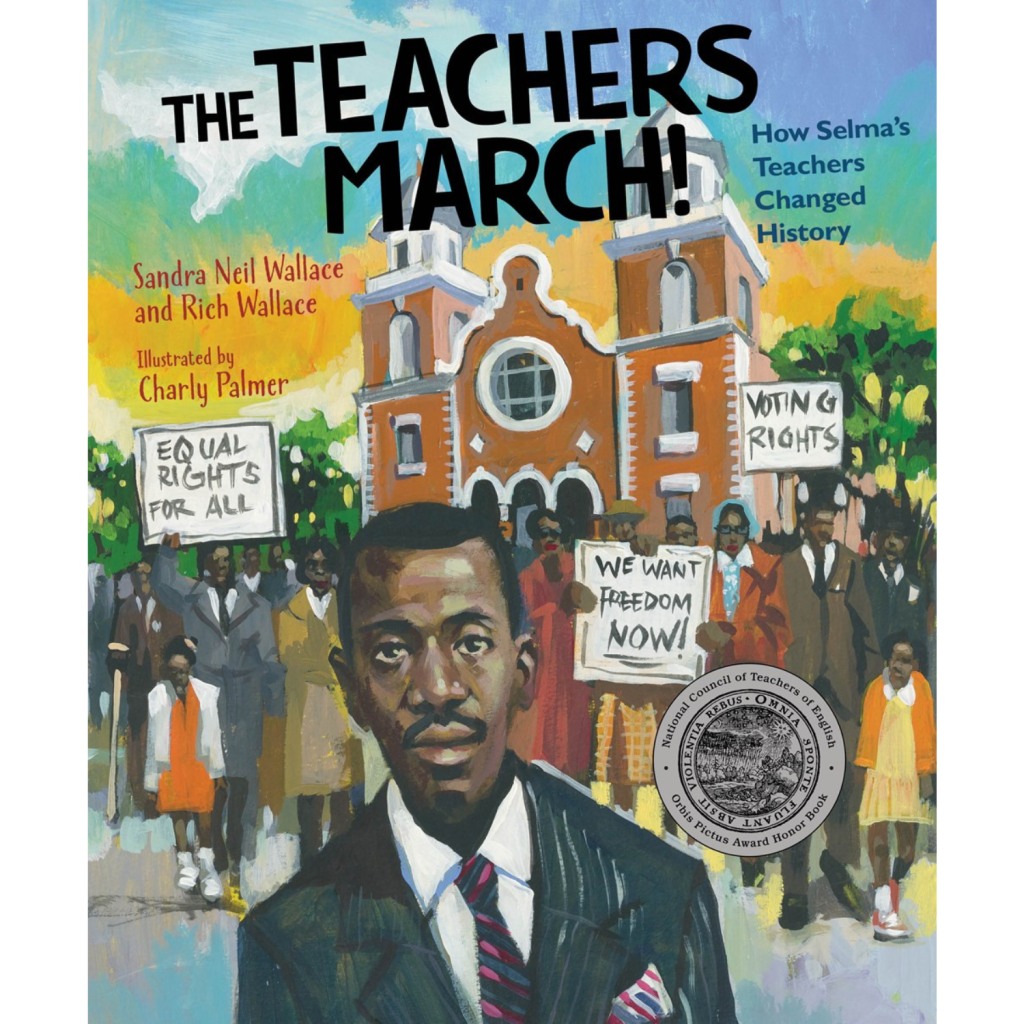
    This is a book with the title: “The Teachers March! - How Selma’s Teachers Changed History” by Sandra Neil Wallace and Rich Wallace and illustrated by Charly Palmer. It shows a beautiful illustration of Black people holding signs saying “Equal Rights for All”, “We Want Freedom NOW!” and “Voting Rights.” They are wearing suits and colorful coats and standing in front of Selma City Hall.

    The Teachers March!: How Selma’s Teachers Changed History by Sandra Neil Wallace (Author), Rich Wallace (Author), Charly Palmer

    Readaloud: https://youtu.be/z9rB5AAtiVQ?si=I9HOB33y3QakJvek
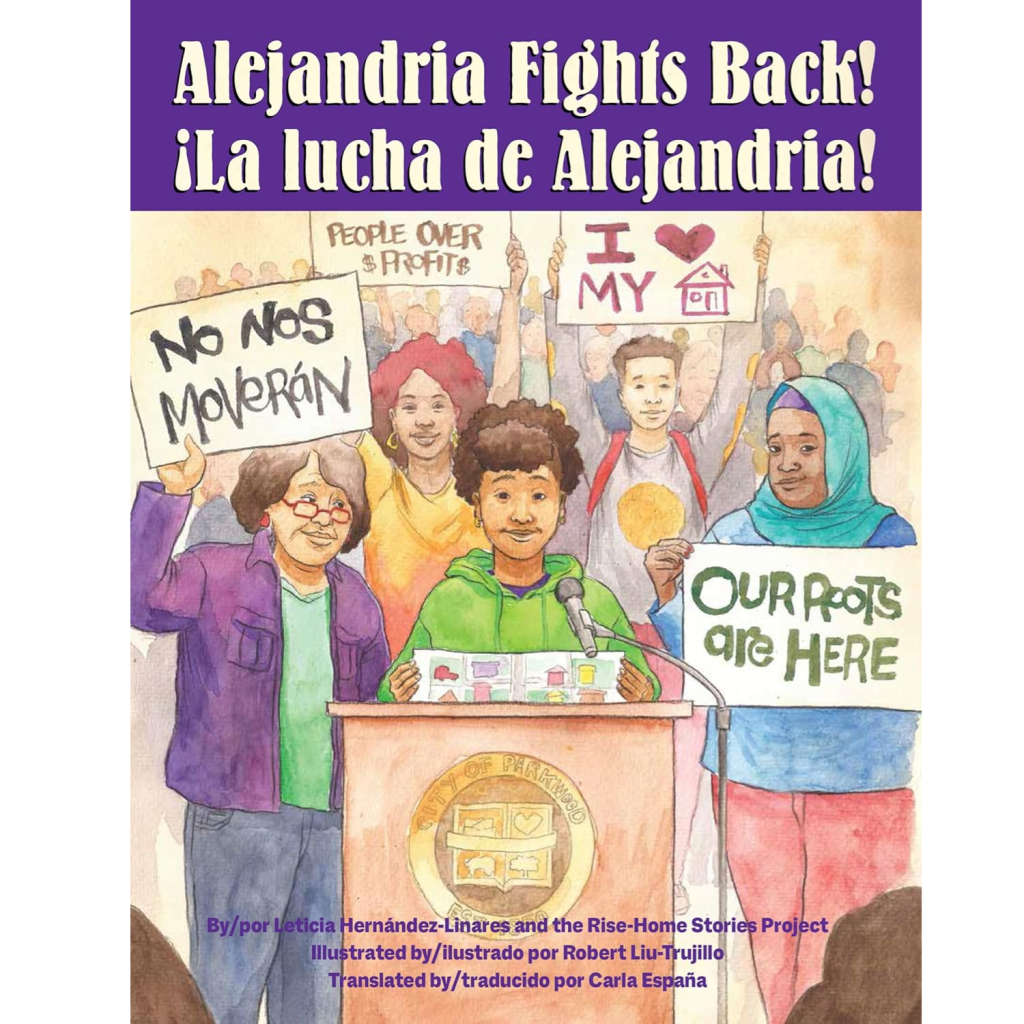
    This is a book titled, “Alejandria Fights Back - La Lucha de Alejandria” by Leticia Hernàndez- Linares and hte Rise-Home Stories Project and illustrated by Robert Liu-Trujillo and translated by Carla España. It shows an illustration of a young brown girl speaking behind a podium with people of all races holding signs that read “no Nos Voverán”, “People Over Profit”, “I Heart My Home” and “Our Roots are Here."

    Alejandria Fights Back! / ¡La Lucha de Alejandria! by Leticia Hernández-Linares (Author), The Rise-Home Stories Project (Author), Robert Liu-Trujillo (Illustrator), Carla España (Translator) (BILINGUAL SPANISH)

    Readaloud: https://youtu.be/adPhiVroya0?si=–Xq9ocRRRkdtOPN

    I understand all these read alouds are in English, and may be limiting for the language your child reads and learns in. Please take this list as a beginning and feel free to find more books on Union power and organizing.

    SF Based Parent Resources are listed below:

    If you are a parent in SFUSD please email through this link: https://actionnetwork.org/letters/san-francisco-families-educators-and-community-demand-stable-schools-now?source=direct_link&

    Please consider adopting a picket at your school site: https://docs.google.com/forms/d/e/1FAIpQLSelkCrL0Xp53Fbn8KEsejhJK9bSqYtR-l5uSG7zip2EpVM-KA/viewform


    Do you have more tips to recommend? Share them in the comments below!

  • Advice for Members of the Global Minority (aka: White Folks) During These Troubling Times

    If you’re a white person who cares about the global majority, there’s a good chance content on social media platforms will spark something in you. In fact, that’s the purpose: to get you enraged and engaged. You’ll probably feel compelled to take action—and that’s not a bad thing. But if you haven’t already done a lot of work unpacking the ways you’ve been indoctrinated into whiteness, it’s important to ensure your activism doesn’t cause more harm.

    Some advice on what NOT to do:

    Forgiveness isn’t yours to give.

    It’s not your job to soften criticism of MAGA folks who are just now seeing the error of their ways. Nor is it your job to counsel people who’ve been harmed to forgive the abuse they’ve suffered in order to “bring both sides together.” Forgiveness is not yours to give—those who caused harm have to do the work to earn it from the communities they’ve hurt.

    Don’t be a white savior.

    Just because you’re waking up to this reality doesn’t mean others haven’t been working on it for much longer. This is not your opportunity to become a white savior or start a new nonprofit. Doing so only colonizes the resistance and takes vital resources, attention, and energy from people with far more knowledge and experience. They have already analyzed the issues, the researched histories, and built communities invested in solving problems. Jumping in to lead a project on a subject you just recently learned about is classic white supremacist behavior.

    Enough with the Pussy Hats and Safety-Pins!

    Wearing jewelry or selling merch “for the cause” is capitalism, not community care. Stop colonizing the resistance. Real activism is about what you DO, not what you WEAR. Just stop.

    Advice on what to DO:

    Take a pause.

    Ask yourself why you need to respond immediately to a problem as old as time. What is happening in you that’s making you feel the need to react. Is the action you want to take truly supporting those being harmed, or does it just make you feel better? A notebook can be a really helpful tool for these kinds of reflection. (Be sure to check out solid resources for unpacking whiteness listed at the end of this article!)

    Look to folks who are already doing the work.

    Listen to and support the needs of Black and Native American organizers, low-income, disabled, and immigrant leaders of color, and queer and trans activists of color.

    Did you see the movie The Help? I didn’t. But that’s what you need to be now. Be. The. Help. You’re not the hero of this story.

    If your role in this movie was Driving Miss Daisy, you would be the driver, and no, you do not get to assume the role of “magical black Negro.” What I’m trying to say her is you are a side character—you don’t have a character arc or a prominent plot line.

    In fact, I take it back. You’re not even a side character. You’re behind the scenes. You’re the gaffer, the person in charge of lighting scenes. You’re the intern getting coffee. The production assistant taping down cables so the actors don’t trip. You are Kraft services, providing food.

    This might feel uninspiring because you grew up watching movies where Tom Cruise goes to Japan and becomes a better samurai than Japanese people who have trained their entire lives to be samurai. (Seriously?) You’re role is not meant to be inspiring—that’s the point.

    Some ideas…

    This actually not that hard, but for some reason, y’all seem to have a lot of trouble thinking of ways to help. I know some of you may be asking,

    “But if I’m not starting my own nonprofit or making ‘resist’ T-shirts on Etsy, what do I do?” — random white mom.

    Some ways to actually be helpful: provide rides, bring food, offer free childcare, donate professional services like research, graphic design, video editing, and website support. Offer to take meeting notes, make flyers, create surveys, write emails for newsletters, reserve venues, provide IT help, provide food, donate laptops and printers, or help get copies made. That’s how you support.

    Do you know someone who needs to read this article? Send to a friend!! Support our work by signing up for the newsletter. Better yet, become a subscriber and help fund our work!

    Are you a member of the global majority with advice to share? Please comment below!